




Plastic-Free Bundles 💙
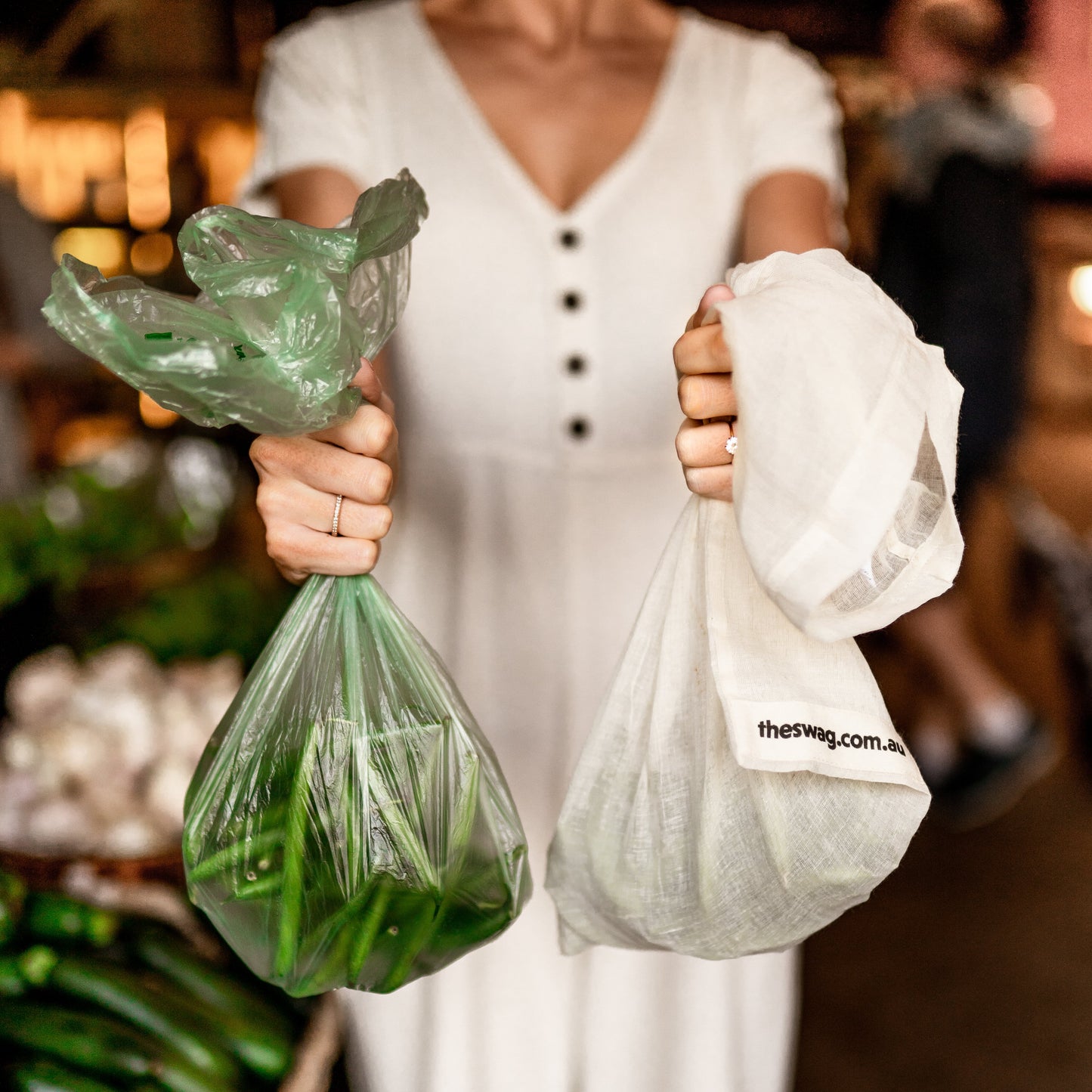
There’s no such thing as sustainable plastic—only less bad versions of the same problem. Whether it’s recycled plastic or silicone, we’re still creating materials that outlive us, accumulate in our environment, and ultimately make their way back into our food and bodies. Going plastic-free isn’t extreme—it’s simply returning to materials that belong in the same system as our food and our planet.” The Swag is a great and easy first step to becoming plastic free by providing effective solutions that are 100% natural, plastic free and that combat food waste in the home 💙
1. Recycling is not a real solution—it’s a delay mechanism
We’ve been told recycling solves plastic waste, but the reality is stark: only a small fraction (less than 9%) of plastic ever gets recycled, and even then, it’s usually down-cycled, not truly reused.
- Recycled plastic often contains unknown chemical mixtures, including residues from its previous use.
- It cannot be recycled indefinitely—each cycle degrades quality and increases fragility.
- Eventually, it still becomes waste… just later.
In other words: recycled plastic doesn’t eliminate pollution—it spreads it out over time.
2. Recycled plastic can be more toxic than virgin plastic
This is where things get uncomfortable.
Because recycled plastic is made from mixed sources:
- It can carry legacy chemicals (like flame retardants, dyes, heavy metals).
- The recycling process can create new chemical byproducts.
- These substances can leach more unpredictably, especially when in contact with food.
So while it feels like the “better choice,” recycled plastic can actually introduce more chemical complexity and risk.
3. Silicone isn’t the clean alternative it’s marketed to be
Silicone is often positioned as a safe, eco-friendly swap—but it’s not the silver bullet.
- It’s a synthetic polymer derived from silica, processed with hydrocarbons.
- It does not biodegrade in any meaningful timeframe and can be even longer than plastic to break down (2,000+ years)
- It’s extremely difficult to recycle, with very limited facilities globally (only one facility in Australia)
- Over time, it can still break down into micro-particles.
So while it may last longer, it still ultimately contributes to the same long-term pollution problem.
4. All plastics shed—into your food, your home, and your body
Whether it’s virgin, recycled, or silicone:
- They release micro-plastics and microscopic particles through wear, heat, and friction.
- These particles are now found in water, soil, air, and the human body.
- Fresh food is especially vulnerable—it’s living, breathing, and porous, meaning it absorbs its environment.
We’re no longer just storing food in plastic—we’re exposing it to it.
5. Plastic contradicts the natural system we rely on
Food is part of a living system. Plastic is not.
- Fresh produce needs to breathe and regulate moisture.
- Plastic traps humidity, accelerates spoilage, and creates the perfect environment for breakdown.
- Natural materials support the lifecycle of food—plastic disrupts it.
6. The only real solution is reduction—not substitution
Switching between plastic types (virgin → recycled → silicone) keeps us in the same system.
True change comes from stepping outside of it entirely.
- Choosing natural, non-toxic, breathable materials
- Designing systems that work with nature, not against it
- Eliminating the problem at the source, rather than managing it at the end


