





Introduction
Fresh fruit and vegetables are some of the most wasted foods globally. We buy beautiful, nutritious produce with the intention of eating well — but too often it ends up forgotten in the fridge, becoming limp, wilted or spoiled before we get the chance to enjoy it.
With grocery prices continuing to rise, food waste is more than frustrating — it is expensive. The average Australian household wastes up to $2,000 worth of food each year, much of it fresh fruit and vegetables that could have been enjoyed with better storage.
Learning how to store produce correctly can help you save money, reduce food waste and keep your favourite fruits and vegetables fresher for longer.
Creating the ideal storage environment for fresh produce is critical.
In this ultimate produce storage guide, we’ll explore everything you need to know about keeping fruit and vegetables fresh — including where to store different produce, when to wash it, how ethylene gas affects freshness, and the simple changes that can help reduce food waste.
Let’s dig in... below is what you'll discover within this Ultimate Produce Storage Guide;
🌿 Jump To:
🥕 How to Store Specific Fruits & Vegetables
💰 How Much Does Food Waste Cost Us?✨
✨ The Golden Rules of Produce Storage
🌱 The Simple Formula for Fresher Produce
📖 The Complete Produce Storage Guide
📊 Quick Reference Fruit & Vegetable Storage Chart
⚠️ Common Produce Storage Mistakes
♻️ How to Reduce Food Waste at Home
🌿 Creating the Ideal Environment for Fresh Produce
💚 Your Swags Can Do So Much More
🌎 Conclusion: Small Changes, Big Impact
🥕 How to Store Specific Fruits & Vegetables
Every fruit and vegetable has different storage needs. Some produce needs moisture to stay crisp, while others need airflow to prevent spoilage. Some belongs in the fridge, while others are best kept at room temperature.
Understanding what each type of produce needs is the secret to keeping it fresher for longer.
Below are our best storage tips for some of the most commonly wasted fruits and vegetables.
Below is a selection of produce that we get asked the most questions about by our customers;
Jump To Your Produce Menu:
💰 How Much Does Food Waste Cost Us?
Reducing food waste isn't just good for the planet—it's one of the easiest ways to save money on your grocery bill.
Around the world, households throw away billions of dollars' worth of perfectly edible food every year, with fresh fruit and vegetables making up a significant proportion of that waste. By storing your produce correctly and using it before it spoils, even small changes can add up to substantial savings over time.
Did you know the most waste foods are fruit, veggies and bread?
Here's what that looks like in different parts of the world:
🇦🇺 Australia
- The average Australian household wastes around AUD$2,000 worth of food each year.
- Approximately 42% of household food waste is fresh fruit and vegetables.
- That's around AUD$840 of produce ending up in the bin every year.
🇳🇿 New Zealand
- The average New Zealand household wastes around NZD$1,520 worth of food each year.
- Around 41% of avoidable household food waste is fresh produce.
- That's approximately NZD$623 worth of fruit and vegetables wasted annually.
🇺🇸 United States
- The average American family throws away an estimated USD$1,500–$2,000 worth of food each year.
- Fresh fruit and vegetables are among the most commonly wasted foods due to spoilage before they're eaten.
🇪🇺 Europe
- Across the European Union, households generate the largest share of food waste, with millions of tonnes discarded every year.
- Fresh fruit and vegetables are consistently among the foods most likely to be wasted because of their relatively short shelf life.
🌱 Every Little Change Adds Up
You don't have to eliminate food waste completely to make a meaningful difference.
For example, preventing just AUD$32 worth of fresh produce from being wasted each fortnight adds up to more than AUD$800 every year. Over the lifetime of your kitchen habits, those savings can easily run into thousands of dollars—while also reducing landfill waste, conserving the water and energy used to grow food, and making the most of every grocery shop.
After all, the freshest food is the food you actually get to enjoy—not the food that ends up in the bin. 🌿
Data sources: End Food Waste Australia, Love Food Hate Waste New Zealand, USDA, European Commission.
Food waste doesn’t just impact the environment — it impacts household budgets too as every piece of food wasted drives up the cost of food for everyone.
Food waste also has a wider environmental impact. When food breaks down in landfill, it produces methane, a greenhouse gas that contributes significantly to climate change.
Reducing food waste starts with small, practical changes — buying what we need, using what we have, and storing fresh produce in a way that helps it last longer.
By understanding how different fruits and vegetables respond to moisture, temperature, airflow and ethylene gas, we can make smarter choices that benefit our kitchens, our wallets and the planet.
✨ The Golden Rules of Produce Storage
Keeping fruit and vegetables fresh for longer doesn’t require complicated systems or expensive equipment. Most spoilage happens because produce is stored in conditions that don’t suit its natural needs.
Fresh food responds to four key factors: moisture, airflow, temperature and ethylene gas.
By understanding these simple principles, you can dramatically improve the shelf life of your produce, reduce food waste and get more value from your groceries.
1. Store Produce in the Right Environment
Different fruits and vegetables have different storage requirements.
Some produce prefers cool temperatures in the fridge, while others are better stored at room temperature. Some need humidity to prevent drying out, while others need airflow to prevent moisture build-up.
For example:
🥬 Leafy greens such as lettuce and spinach need moisture and airflow to prevent wilting and becoming slimy.
🥕 Root vegetables like carrots and celery benefit from a cool, humid environment to help maintain their crisp texture.
🍌 Bananas, tomatoes and avocados often need to ripen at room temperature before being moved into the fridge.
There is no single storage method that works for every type of produce — the key is understanding what each item needs.
2. Avoid Trapping Excess Moisture
Moisture is one of the biggest causes of fresh produce spoilage.
When vegetables are sealed in airtight plastic bags or containers, moisture released naturally by the produce can become trapped. This creates a high moisture environment where mould, bacteria and decay can develop more quickly. Plus, as ethylene builds up and remains trapped inside the plastic bags and containers, this encourages quicker ripening and ultimately rotting.
However, produce that loses too much moisture can also deteriorate, becoming wilted, shrivelled, limp or dry.
The goal is balance:
✅ Enough humidity to prevent dehydration
✅ Enough airflow to prevent condensation build-up
Breathable storage allows produce to maintain the moisture it needs while allowing excess humidity to escape.
3. Give Produce Room to Breathe
Fresh fruit and vegetables are living and breathing foods. Even after harvesting, they continue to breathe and release gases.
When produce is packed too tightly or stored in sealed plastic packaging, gases can build up and accelerate ageing.
Good airflow helps:
- Reduce condensation
- Slow spoilage
- Prevent premature wilting
- Maintain freshness
This is why breathable storage solutions are often more effective than completely sealed containers for fresh produce.
4. Understand Ethylene Gas
Ethylene is a naturally occurring plant hormone that helps fruit ripen.
Some fruits produce large amounts of ethylene, including:
🍎 Apples
🍌 Bananas
🥑 Avocados
🍐 Pears
🍑 Stone fruit
🍅 Tomatoes
While ethylene is completely natural, it can speed up ageing in nearby produce that is sensitive to it.
Ethylene-sensitive foods include:
🥬 Lettuce and leafy greens
🥦 Broccoli
🌿 Fresh herbs
🥕 Carrots
🥒 Cucumbers
Keeping ethylene-producing fruits separate from sensitive vegetables can help prevent premature spoilage.
Read our complete guide:
Everything You Need To Know About Ethylene Gas →
5. Wash Produce Correctly
Washing fruit and vegetables is an important step in removing dirt, bacteria and some surface residues — but when you wash produce matters.
Some produce stores better when washed just before eating, while other items can be washed, dried thoroughly and stored ready to use.
A few simple rules:
✅ Wash leafy greens and dry thoroughly before storing
✅ Avoid storing wet produce unless it is designed for a humid environment
✅ Use clean water and appropriate cleaning methods
✅ Avoid storing produce with excess surface moisture
Learn more:
How To Wash Fruit and Vegetables Naturally →
6. Remove Damaged Produce Quickly
One spoiled piece of produce can affect everything around it.
Damaged or overripe fruit and vegetables release more moisture and ethylene gas, which can speed up the deterioration of nearby produce.
Make it a habit to:
- Check your fridge regularly
- Remove mouldy or spoiled items
- Use ripe produce first
- Move produce that needs attention into an "eat me first" section. In the case of The Swag we like to recommend having a small red trimmed Swag that you move all of your older produce into and this is your "use me first bag"
7. Store Like With Like
Not all fruits and vegetables belong together.
Some combinations work well, while others can shorten shelf life.
Examples:
❌ Don't store potatoes and onions together — onions release gases that can cause potatoes to spoil faster.
❌ Avoid storing bananas directly beside delicate vegetables.
✅ Group leafy greens together (such as lettuce and bunches of herbs)
✅ Store root vegetables together.
✅ Keep high-ethylene fruits separate from ethylene-sensitive produce.
8. Make Fresh Produce Easy To See and Use
The best storage system is the one you will actually use.
If produce is hidden at the back of the fridge, it is more likely to be forgotten.
Try:
- Keeping frequently used produce visible
- Preparing vegetables when you have time
- Creating a weekly "use first" section or Swag bag. We recommend having a small red trimmed Swag that you move all of your older produce into and this is your "use me first bag"
- Storing produce in a way that makes meal preparation easier
The less food you forget about, the less food you waste.
🌱 The Simple Formula for Fresher Produce
The secret to keeping fruit and vegetables fresh for longer comes down to four things:
🌱 The right temperature
💧 The right moisture balance
🌬️ Good airflow
🍎 Understanding ethylene
Adjust Your Storage for the Seasons
As the seasons change, it’s worth adjusting how you store your fresh produce. Summer heat and winter temperatures can affect both your fridge and the way your fruit and vegetables behave.
Your refrigerator should ideally be kept between 1°C and 4°C (34°F–40°F). Temperatures above this range can allow harmful bacteria to multiply more quickly, while temperatures that are too cold can cause some fruits and vegetables to freeze, affecting their texture, flavour and quality.
Keep in mind that even at fridge temperatures, some spoilage bacteria can still grow over time. This doesn’t necessarily make food unsafe, but it can affect freshness, taste and appearance.
Different fruits and vegetables also have different storage needs. Some produce thrives in the cool environment of the fridge, while others are best kept at room temperature until ripe. Some foods need a humid environment to stay crisp, while others need airflow to prevent excess moisture and mould.
Once you understand these simple storage principles — temperature, moisture, airflow and the needs of different produce — keeping fruit and vegetables fresh becomes much easier. Small changes can make a big difference to how long your food lasts and how much you enjoy it.
Should You Wash Fruit and Vegetables Before Storing?
Fresh produce can pick up dirt from soil, handling, transport, storage and preparation. Some fruits and vegetables may also have surface residues from farming practices or natural coatings that help protect them. your produce has also been handled by many hands during the picking, packing and unpacking process. Not to mention all of the customers that fondle your food!
A quick rinse under the tap is a good first step, but some produce benefits from a little extra care — especially leafy greens, textured vegetables and items with firmer skins.
The best way to wash fruit and vegetables, natural methods for reducing surface residues, and how to prepare your produce for longer-lasting freshness.
📖 The Complete Produce Storage Guide
🥬 Leafy Greens
Leafy greens are some of the most delicate produce items to store. Lettuce, bok choy, Swiss chard, kale, spinach and fresh herbs can quickly wilt, become slimy or lose their crisp texture when stored incorrectly.
The key to keeping leafy greens fresh is finding the right balance between hydration and airflow.
Store leafy greens in a lightly dampened Swag and keep them in the fridge crisper. The breathable cotton layers help maintain humidity while allowing excess moisture to escape — creating the ideal environment for delicate greens.
Before storing:
✅ Remove any damaged leaves
✅ Wash if needed and dry thoroughly
✅ Place into a dampened Swag
✅ Refresh your Swag moisture when needed
👇 Watch The Swag founder, Peita Pini, share her best tips for storing leafy greens — you won't beLEAF how long your greens can last! 🌿
Watch: Storing leafy greens for ultimate freshness →
See our 10-day storage experiment with herbs, carrots and cucumber →
🥒 Cucumbers
Nobody likes a soft, watery cucumber!
Cucumbers are made up of around 96% water, which means they can quickly lose their crisp texture once harvested. The secret to keeping cucumbers fresh is helping them maintain their moisture without trapping excess water.
Store cucumbers in a lightly dampened Swag in the fridge crisper.
Before storing:
✅ Wash your cucumbers (apple cider vinegar can be used if desired)
✅ Pat them completely dry with a Swag Non-Paper Towel or clean tea towel
✅ Place them in a dampened Swag
✅ Keep them away from heavier vegetables that could squash them
Cucumbers are delicate, so avoid placing them underneath heavier produce. Pressure damage can cause soft spots and speed up spoilage.
Learn more about storing cucumbers →
Watch our 10-day storage experiment with herbs, carrots and cucumber →
🥕 Carrots
Carrots are one of the best examples of how the right storage conditions can dramatically extend freshness.
If your carrots still have their leafy tops attached, remove them before storing. The greens continue drawing moisture from the root, causing carrots to soften more quickly.
For the best results:
✅ Remove carrot tops and store separately if you want to use them
✅ Rinse carrots if needed and allow them to dry
✅ Place carrots into a lightly dampened Swag
✅ Store in the fridge crisper
When stored correctly, carrots can stay crisp and fresh for weeks — and sometimes even months.
Discover more tips in our complete guide: How To Store Carrots →
See our 10-day storage experiment with herbs, carrots and cucumber →
🥬 Celery
Celery is made up of around 95% water, which is why it can quickly become limp once harvested. As celery loses moisture, the stalks become soft and lose their satisfying crunch.
To keep celery fresh:
✅ Separate the stalks
✅ Give them a quick rinse if needed
✅ Allow them to dry before storing
✅ Trim the dry ends so the stalks can absorb moisture
✅ Store in a Long Swag or Large Swag
Celery performs best in a humid environment, so keep your Swag damp and store it in the fridge crisper wherever possible.
If you don’t have room in your crisper, celery can also be stored on a fridge shelf — just remember that produce prone to wilting benefits from a higher humidity environment.
Think of your Swag like a mini fresh-produce environment: just like us, fruit and vegetables need water to stay healthy.
Discover more tips in our complete guide: How To Store Celery →
🌽 Corn
Fresh corn is at its sweetest soon after harvesting, but it can quickly lose moisture and flavour if stored incorrectly.
The key to keeping corn fresh is protecting it from dehydration while maintaining the right humidity balance.
For the best results, remove the husk before storing and place corn into a dampened Swag in the fridge crisper.
If you like to keep the husk for barbecuing or cooking, simply loosen the husk slightly rather than removing it completely. This helps protect the corn while allowing you to prepare it when needed.
To keep corn fresh for longer:
✅ Remove the husk before storing (or loosen it if keeping for cooking)
✅ Rinse only if needed and allow the corn to dry before storing
✅ Place corn into a dampened Swag
✅ Store in the fridge crisper
✅ Use within the recommended timeframe for the sweetest flavour
The Swag helps create the ideal environment for corn by reducing moisture loss while allowing airflow — helping your corn stay plump, juicy and delicious for longer.
🍓 Berries
Berries are one of the most delicate types of fresh produce. Strawberries, blueberries, raspberries and blackberries can quickly become soft or mouldy because of their high moisture content and delicate skin.
The secret to keeping berries fresh is protecting them from excess moisture while maintaining airflow.
For the best results, keep berries in their original punnet and nestle them in or around your dampened Swags in the fridge crisper.
The Swag helps create a more stable environment around your berries without trapping excess condensation.
To keep berries fresh for longer:
✅ Keep berries in their original punnet where possible for protection
✅ Avoid washing berries until you are ready to eat them
✅ Remove any soft, damaged or mouldy berries immediately
✅ Store berries in the fridge crisper
✅ Nestle punnets amongst your dampened Swags to help maintain freshness
Tip: Moisture sitting directly on berries can speed up mould growth, so avoid storing wet berries. If you wash berries before storing, make sure they are completely dry first.
With the right storage conditions, you can enjoy fresh, flavourful berries for longer and reduce the amount of fruit that ends up being wasted.
Read about our scientific study done on blueberries stored in The Swag →
🥔 Potatoes
Potatoes and sweet potatoes are a little different from many other vegetables. Unlike leafy greens and most produce that benefits from refrigeration, potatoes prefer a cool, dark and dry environment.
For long-lasting freshness and firmness, store potatoes and sweet potatoes in a dry Swag and place them in a cool, dark pantry or cupboard — not in the fridge or crisper.
Storing potatoes in the fridge can affect their texture and flavour, while exposure to light can cause them to turn green and develop a bitter taste.
For the best results:
✅ Store potatoes in a dry Swag to allow airflow while protecting them from light
✅ Keep them in a cool, dark cupboard or pantry
✅ Check regularly and remove any damaged or spoiled potatoes
✅ Avoid washing potatoes before storage, as excess moisture can encourage spoilage
✅ Keep potatoes away from strong-smelling foods, as they can absorb odours
✅ Avoid storing them near heat sources such as ovens or appliances
Tip: Potatoes and onions are both pantry staples, but they are best stored separately. Both release gases that can affect the shelf life of the other when stored together.
Learn more: How To Store Potatoes and Their Nutritional Benefits →
🧅 Onions
Onions are another pantry staple that prefer a cool, dark and dry environment.
For the best freshness and firmness, store whole onions in a dry Swag in a cool cupboard or pantry — not in the fridge crisper.
The breathable fabric allows airflow while protecting onions from light and excess moisture, which can cause them to soften or spoil.
For the best results:
✅ Store whole onions in a dry Swag
✅ Keep them in a cool, dark pantry
✅ Avoid washing before storage
✅ Check regularly and remove any spoiled onions
✅ Keep away from heat sources such as ovens and stovetops
Once an onion has been cut, its storage needs change. Cut onion can be placed into a dampened Swag and stored in the fridge crisper to help maintain freshness for longer.
Because onions have a strong aroma, it is best to store them separately from other produce to prevent flavour transfer.
Tip: Avoid storing onions and potatoes together. While they are both pantry favourites, they release gases and moisture that can shorten each other's shelf life.
Learn more: How To Store Onions and Their Nutritional Benefits →
🍎 Fruit
Fruit can be a little trickier to store because many varieties produce ethylene gas — a natural plant hormone that speeds up ripening.
Some fruits produce much higher levels of ethylene than others, including:
🍎 Apples
🥑 Avocados
🍌 Bananas
🍈 Cantaloupe
🥝 Kiwi fruit
🍑 Peaches
🍐 Pears
🍅 Tomatoes
These fruits are often best left at room temperature so they can naturally ripen and develop flavour.
For fruit that is not yet ripe:
✅ Store it in a dampened Swag in the fridge to slow the ripening process
✅ Move fruit into your fruit bowl when you are ready for it to soften and sweeten
✅ Once fully ripe, return it to the fridge in a Swag if you need extra time before eating
A handy tip is to use a small red-trimmed Swag for ripe fruit so you can easily identify what needs to be eaten first.
Understanding which fruits produce ethylene — and which vegetables are sensitive to it — can help prevent premature spoilage.
Read our complete guide: How To Store High Ethylene Produce →
🍄 Mushrooms
Mushrooms are one of the best examples of how the right storage environment can make a huge difference.
Many mushrooms are sold wrapped in plastic packaging, but plastic can trap moisture and condensation, causing mushrooms to become slimy and spoil more quickly.
Whenever possible, choose mushrooms sold in paper bags and transfer mushrooms out of plastic packaging as soon as you get home.
For the best results:
✅ Remove mushrooms from plastic packaging
✅ If mushrooms are slimy, gently wash them in water with a small amount of white vinegar
✅ Pat them completely dry with a clean tea towel
✅ Place mushrooms into a clean, dry Swag
✅ Store in the fridge
Unlike leafy greens, mushrooms do not need a damp Swag. They prefer a dry, breathable environment that allows excess moisture to escape.
If your mushrooms come in a brown paper bag, you can place the bag inside your fridge amongst your other Swags. The breathable environment helps support freshness for longer.
Whenever possible, choosing mushrooms in paper packaging is a more sustainable option and helps avoid unnecessary plastic use.
🎥 Watch: How To Store Mushrooms →
🎥 Watch: How To Prepare Mushrooms →
🍍 Pineapple
Pineapple is a delicious tropical fruit, but like all fresh produce, it has a limited shelf life.
Knowing how to choose, store and prepare pineapple correctly can help you enjoy every bite while reducing unnecessary food waste.
The best storage method depends on whether your pineapple is:
🍍 Whole and uncut
🍍 Cut into pieces
🍍 Fully ripe or still developing flavour
Whole pineapples can continue to ripen at room temperature, while cut pineapple should always be stored in the fridge.
Read our complete guide: How To Keep Pineapple Fresh For Longer — The Best Way To Store Whole and Cut Pineapple →
🌿 Herbs
Fresh herbs such as parsley, coriander, basil, mint and dill are some of the quickest ingredients to lose their freshness. They can wilt, turn limp or become slimy within just a few days when stored incorrectly.
The secret to keeping herbs fresh is maintaining the right balance of moisture and airflow.
Like leafy greens, herbs benefit from a cool, hydrated environment that prevents them from drying out while allowing excess moisture to escape.
For the best results:
✅ Remove any damaged or wilted leaves before storing
✅ Rinse herbs if needed and allow them to dry thoroughly
✅ Place herbs into a lightly dampened Swag
✅ Store in the fridge crisper
✅ Refresh the moisture in your Swag when needed
Different herbs can have slightly different preferences. Soft herbs like coriander, parsley and mint enjoy a humid environment, while more delicate herbs like basil are often best stored at room temperature until needed.
The breathable cotton layers of The Swag help create a stable environment that keeps herbs hydrated without trapping excess condensation — helping them stay fresher for longer.
👇 Watch The Swag founder, Peita Pini, share her best tips — you won't beLEAF how long your herbs and greens can last! 🌿
Watch: Storing leafy greens for ultimate freshness →
See our 10-day experiment with herbs, carrots and cucumber →
🥦 Other Vegetables
While every fruit and vegetable has unique storage needs, many vegetables benefit from a similar approach:
🌱 A cool environment
💧 Balanced humidity
🌬️ Good airflow
Most leafy greens and vegetables that tend to wilt — including lettuce, spinach, broccoli, celery and herbs — prefer a lightly dampened Swag stored in the fridge crisper.
Use the guide below to find the best storage method for your favourite produce and learn how to keep your fresh food tasting better for longer.
🍞 Sourdough Bread
Fresh sourdough bread is best enjoyed when it has that perfect balance of a crisp crust and soft, airy centre. However, artisan breads can quickly become stale because they are often made without preservatives or additives.
The biggest enemy of fresh bread is not moisture — it’s air exposure.
When bread is left exposed, the air causes it to dry out and become stale. However, storing bread in plastic can create a different problem by trapping moisture and causing the crust to soften.
For the best results, store unsliced bread in an Organic Bread Swag.
The breathable natural cotton allows the bread to maintain airflow while helping protect it from drying out too quickly.
For the freshest sourdough:
✅ Store whole, unsliced bread in your Organic Bread Swag
✅ Keep bread at room temperature
✅ Avoid storing bread in the fridge, as this can accelerate staling
✅ Slice only what you need to help retain freshness
✅ Freeze any bread you won’t eat within a few days
Bread made without preservatives — especially homemade or artisan sourdough — is naturally designed to be enjoyed fresh. While The Swag Bread Bag can help extend freshness by slowing moisture loss, the biggest benefit is helping your bread breathe naturally without relying on plastic packaging.
Discover more: 4 Ways to Get the Most Out of Your Swag Organic Bread Bag →
📊 Quick Reference Fruit & Vegetable Storage Chart
Fridge, Pantry or Fruit Bowl? Where Should You Store Different Produce?
Not sure where your produce belongs? Use this simple guide to quickly check the best storage location and Swag method for keeping your fresh food at its best.
| Produce | Best Storage Location | Swag Type | Storage Conditions |
|---|---|---|---|
| 🍎 Fruit (ripening fruit) | Fruit bowl / room temperature | Small Swag (when needed) | Damp |
| 🍎 Fruit (fully ripe or needing extra time) | Fridge crisper | Small Swag | Damp |
| 🥬 Leafy greens (lettuce, spinach, kale, herbs) | Fridge crisper | Small or Leafy Greens Swag | Damp |
| 🥕 Carrots | Fridge crisper | Medium or Large Swag | Damp |
| 🥒 Cucumbers | Fridge crisper | Medium or Large Swag | Damp |
| 🥬 Celery | Fridge crisper | Long or Large Swag | Damp |
| 🌽 Corn | Fridge crisper | Large Swag | Damp |
| 🍓 Berries | Fridge crisper | Store punnet around damp Swags | Damp environment |
| 🥦 Most other vegetables | Fridge crisper | Large Swag | Damp |
| 🍄 Mushrooms | Fridge | Swag | Dry |
| 🥔 Potatoes & sweet potatoes | Cool, dark pantry | Swag | Dry |
| 🧅 Onions | Cool, dark pantry | Swag | Dry |
| 🍞 Sourdough bread | Pantry / room temperature | Organic Bread Swag | Dry |
Remember: The goal of produce storage is balance. Fresh food needs the right combination of moisture, airflow and temperature to stay crisp, nutritious and delicious for longer.
When in doubt:
💧 Wilted vegetables usually need more humidity
🌬️ Slimy vegetables usually need to be dried and given more airflow
❄️ Delicate produce generally prefers cooler temperatures
🍎 Ripening fruit often needs room temperature
⚠️ Common Produce Storage Mistakes
Even with the best intentions, many of us store fresh produce in ways that accidentally shorten its shelf life.
The good news? Most storage mistakes are easy to fix.
By making a few simple changes, you can help your fruit and vegetables stay fresher for longer, reduce food waste and get more value from your groceries.
❌ Mistake 1: Storing All Produce the Same Way
One of the biggest storage mistakes is treating all fruit and vegetables the same.
Fresh produce has different needs depending on its structure, water content and how it naturally ripens.
For example:
🥬 Leafy greens need moisture to prevent wilting.
🥔 Potatoes need a cool, dark and dry environment.
🍌 Bananas and avocados often need room temperature to ripen.
🍄 Mushrooms need airflow to prevent excess moisture.
There is no single storage method that works for everything — understanding what each type of produce needs is the key to keeping it fresh.
❌ Mistake 2: Keeping Produce in Plastic Bags
Plastic bags are convenient, but they can create challenges when storing fresh produce.
Many fruits and vegetables naturally release moisture after harvesting. When trapped inside plastic, condensation can build up, creating an environment where mould and spoilage can develop more quickly.
Plastic can also restrict airflow, which is important for many types of produce.
Instead, choose breathable storage that allows excess moisture to escape while helping produce maintain the humidity it needs.
Learn more about Produce Packed in Plastic: How Does it Affect your Health?
Why you should not store your produce in plastic →
❌ Mistake 3: Washing Everything Before Storing
While washing fruit and vegetables is an important step, washing everything immediately isn't always the best approach.
Excess moisture left on produce can speed up spoilage, particularly for delicate items like berries and mushrooms.
For best results:
✅ Wash leafy greens if you prefer to prepare them ahead of time, but dry them thoroughly before storing
✅ Keep berries dry until you are ready to eat them
✅ Wash delicate produce close to when you plan to use it
✅ Remove excess surface moisture before storage
The exception is produce that benefits from being washed and stored ready to use — just make sure it is properly dried first.
Read our guide: How To Wash Fruit and Vegetables Naturally →
❌ Mistake 4: Storing Ethylene-Producing Fruits Next To Vegetables
Some fruits naturally release ethylene gas, a plant hormone that speeds up ripening.
High ethylene-producing fruits include:
🍎 Apples
🍌 Bananas
🥑 Avocados
🍐 Pears
🍑 Stone fruit
🍅 Tomatoes
While this process is completely natural, it can cause nearby ethylene-sensitive vegetables to age faster.
Keep high-ethylene fruits separate from produce such as:
🥬 Lettuce and leafy greens
🥦 Broccoli
🌿 Fresh herbs
🥕 Carrots
🥒 Cucumbers
Read our complete guide: Everything You Need To Know About Ethylene Gas →
❌ Mistake 5: Storing Wet Produce
Moisture is essential for keeping many vegetables crisp — but too much moisture can cause problems.
Wet leaves, dripping vegetables and trapped condensation create the perfect conditions for mould and decay.
Before storing:
✅ Shake off excess water
✅ Pat produce dry with a clean towel
✅ Avoid sealing wet vegetables in airtight containers
✅ Allow airflow around your produce
The goal is balance: enough humidity to prevent dehydration, but enough airflow to prevent moisture build-up.
❌ Mistake 6: Forgetting About Produce Once It Goes Into The Fridge
Out of sight often means out of mind.
Produce hidden at the back of the fridge is more likely to be forgotten until it has spoiled.
Try:
✅ Keeping frequently used produce visible
✅ Creating an "eat first" section in your fridge
✅ Checking your produce once or twice a week
✅ Using softer produce in smoothies, soups or cooking before it goes to waste
Small habits can prevent a surprising amount of food waste.
❌ Mistake 7: Overpacking Your Storage Bags
Fresh produce needs room to breathe.
Overfilling storage bags can reduce airflow and create pockets of trapped moisture, which can speed up deterioration.
For best results:
✅ Avoid overcrowding bags
✅ Allow airflow between produce items
✅ Store larger vegetables in appropriately sized bags
✅ Separate produce that bruises easily
Giving your vegetables a little extra space can help them stay fresher for longer.
The Simple Fix
The best produce storage system comes down to understanding four things:
🌡️ Temperature
💧 Moisture
🌬️ Airflow
🍎 Ethylene
Once you get these basics right, keeping fruit and vegetables fresh becomes much easier — and a few small changes can make a big difference to how much food you
♻️ How to Reduce Food Waste at Home
class="PDq2pG_selectionAnchor">
Reducing food waste doesn't have to be difficult. In fact, a few simple habits can dramatically extend the life of your fruit and vegetables, save hundreds of dollars each year, and reduce your environmental impact.
The biggest difference comes from storing produce correctly from the day you bring it home. Understanding ethylene gas, giving produce room to breathe, and storing each fruit and vegetable in the right conditions can help keep your groceries fresher for much longer.
Here are some of our favourite food waste reduction tips:
🛒 Shop Local When You Can
Buying fresh produce from local farmers' markets, greengrocers or nearby growers often means your fruit and vegetables have travelled fewer kilometres and spent less time in storage before reaching your kitchen.
Not only are you supporting local farmers and businesses, but you'll often enjoy fresher, better-tasting produce with a longer shelf life.
🍓 Shop Seasonally
Choosing seasonal fruit and vegetables is one of the simplest ways to reduce food waste while enjoying produce at its best.
Seasonal produce is naturally grown in conditions where it thrives, which often means it has better flavour, higher nutritional value and a longer shelf life. Because it doesn't need to travel as far or spend as long in storage before reaching your kitchen, it is often fresher when you buy it.
🌱 Bonus benefit: Seasonal produce is often grown in conditions where it naturally thrives, which can reduce the need for intensive farming inputs. Choosing seasonal and locally grown produce can be a great way to support more sustainable growing practices — yay!
Buying what's in season can also help reduce costs. When a particular fruit or vegetable is abundant, there is usually a greater supply available, which can make it more affordable than out-of-season produce that has been grown in controlled environments or transported long distances.
🌱 A few ways to shop seasonally:
- Visit your local farmers' market or farm gate stall.
- Choose produce that is abundant and grown locally.
- Plan meals around what's fresh and available rather than buying the same ingredients year-round.
- Preserve seasonal produce by freezing, fermenting, pickling or storing it correctly for later use.
By working with nature's seasons, you can enjoy fresher food, support local growers and reduce the environmental impact associated with transporting and storing out-of-season produce.
Learn more about shopping seasonal here
🌬️ Give Your Produce Room to Breathe
Fresh produce is still alive after it's harvested. It continues to respire, releasing moisture and gases as it naturally ages.
Avoid cramming your fridge crisper, pantry or fruit bowl so tightly that air can't circulate. Overcrowding traps moisture and speeds up spoilage.
💡 Top Tip: Aim to store produce in a single layer wherever possible, allowing plenty of airflow around each item.
🍎 Separate Ethylene-Producing Fruit
Not all fruit and vegetables should be stored together.
Many fruits naturally produce ethylene gas, which speeds up the ripening of nearby produce. While this is useful if you want to ripen an avocado quickly, it's bad news for leafy greens, herbs and many vegetables.
High ethylene producers include:
- 🍌 Bananas
- 🍎 Apples
- 🥑 Avocados
- 🍐 Pears
- 🍑 Peaches
- 🍅 Tomatoes
Keep these away from ethylene-sensitive vegetables such as lettuce, broccoli, cucumbers, carrots, celery and fresh herbs whenever possible.
👉 Read our guide: Everything You Need to Know About Ethylene Gas
📝 Shop With a Plan
Did you know Aussies waste around one in every four bags of groceries they buy?
One of the easiest ways to reduce waste is to make a shopping list before heading to the supermarket—and stick to it.
Buying only what you know you'll use helps prevent forgotten fruit and vegetables from spoiling in the back of the fridge.
❄️ Look After Your Fridge
Your refrigerator works hard to keep your food fresh, but it also needs a little care.
Keep it clean, check the temperature regularly (ideally 1°C–4°C), and remove any ice build-up that could freeze delicate produce.
A clean, well-maintained fridge helps create the ideal environment for fresh fruit and vegetables.
🚫 Ditch the Plastic
Plastic bags and airtight containers may seem convenient, but they often trap condensation around produce, creating the perfect environment for spoilage.
Fresh fruit and vegetables need airflow as well as balanced humidity. Choosing breathable storage instead of plastic helps reduce excess moisture while allowing produce to stay hydrated naturally.
👀 Use Older Produce First
Get into the habit of checking your fruit bowl and fridge every few days.
Move older produce to the front where you'll see it first, and plan meals around anything that's nearing the end of its shelf life.
This simple "first in, first out" approach can significantly reduce unnecessary waste.
🥣 Cook With What You Have
Wilted spinach? Make a spinach frittata
Soft tomatoes? Turn them into pasta sauce or make a tomato salad
Overripe bananas? Bake banana bread - see recipe here
Potatoes starting to sprout? Cook this Potato Gratin recipe
Cauliflower starting to brown? Make this cauliflower hummus
Pumpkin going soggy? Cook this pumpkin and feta quiche
Lemons going south? Cook this yummy lemon tart
Pineapple completely ripe? Discover tips on what to do here
Mushy mandarines? cook this one
Berries going bad? Make a berry compote
Capsicums looking a bit... well, stuffed? Then just stuff 'em!
Apple, kale, celery, carrots, beetroot going bad? Just juice 'em!
Orange, lemon, pomelo, mandarin peels? Preserve them with this recipe
Leeks looking a little mous (french for limp)? Cook a leek fondue
Slightly soft vegetables are often perfect for soups, casseroles, curries and stir-fries. Using what you already have before buying more is one of the easiest ways to reduce food waste.
🌱 Every Little Change Adds Up
Reducing food waste isn't about being perfect—it's about making small changes that become everyday habits.
By storing produce correctly, shopping mindfully and using food before it spoils, you'll save money, reduce landfill waste and enjoy fresher, more nutritious fruit and vegetables every day.
❓ Frequently Asked Questions
🥬 Should I wash fruit and vegetables before storing them?
It depends on the type of produce. Firm fruit and vegetables can usually be washed before storage, provided they are dried thoroughly before being put away. Leafy greens can also be washed and spun or patted dry before storing. However, delicate produce like berries and mushrooms are generally best left unwashed until you're ready to eat them, as excess moisture can encourage mould growth.
If you do wash your produce before storing it, a soak in water and white vinegar followed by a thorough rinse can help remove dirt, bacteria and some surface pesticide residues.
👉 Read more: How to Wash Fruit and Vegetables Naturally
🍎 Should fruit and vegetables be stored together?
Not always.
Many fruits naturally produce ethylene gas, a plant hormone that speeds up ripening. While this is perfectly natural, it can cause nearby vegetables to spoil much faster.
It's best to keep high ethylene-producing fruits like apples, bananas, avocados, pears and tomatoes separate from ethylene-sensitive vegetables such as lettuce, broccoli, cucumbers, carrots and fresh herbs.
👉 Learn more: Everything You Need to Know About Ethylene Gas
🌬️ Why do my vegetables go slimy in the fridge?
Slimy vegetables are usually the result of excess moisture and poor airflow.
Plastic bags and airtight containers can trap condensation around your produce, creating the perfect conditions for bacteria and mould to develop. Using breathable storage, avoiding overcrowding and removing excess surface water before storing can all help prevent vegetables from becoming slimy.
Can I save slimy vegetables?
Sometimes, yes. A light, slippery film on firm vegetables such as cucumbers, celery or carrots doesn't always mean they've spoiled. It can simply be caused by excess surface moisture and trapped condensation.
If the vegetable is still firm and smells fresh, you can often revive it by:
✅ Washing it in a solution of 1 part white vinegar to 5 parts water for 10–15 minutes.
✅ Rinsing thoroughly under cold running water.
✅ Drying it completely with a clean tea towel or reusable cloth.
✅ Storing it correctly in a breathable produce bag (no plastic) and use it within the next day or two.
However, if the vegetable has become soft, smells unpleasant, feels excessively slimy, or shows signs of mould, it's best to discard it or compost it.
A little prevention goes a long way. Avoid storing produce in airtight plastic bags, don't overcrowd your fridge, and always remove excess moisture before storing fresh fruit and vegetables.
🥔 Should potatoes be stored in the fridge?
No.
Whole potatoes are best stored in a cool, dark and well-ventilated pantry. Refrigerating potatoes can cause their starches to convert into sugars more quickly, affecting both their flavour and texture.
Store potatoes in a dry permeable bag away from direct sunlight and heat sources for the best results.
https://www.theswag.com.au/blogs/blog/potato-gratin-recipe
🧅 Can onions and potatoes be stored together?
It's best to keep them separate.
Onions release moisture and gases that can encourage potatoes to sprout or spoil more quickly. Storing each in its own dry Swag in a cool, dark pantry will help maximise their shelf life.
🌿 What's the best way to store fresh herbs?
Most soft herbs such as coriander and dill stay fresh longest when stored in a lightly dampened tea towel and stored in the fridge crisper.
Basil is the exception. It prefers room temperature and can blacken if stored in the fridge. So, we recommend putting basil in a glass of water on the kitchen windowsill. If you can purchase basil with the roots on - thats even better! Basil likes a lot of water so soak the roots and keep the water fresh. Morning or afternoon sun is great too.
Keeping herbs hydrated while allowing them to breathe helps prevent wilting and extends freshness.
🍓 Why do berries go mouldy so quickly?
Berries have delicate skins and naturally high moisture content, making them one of the quickest fruits to spoil.
To help berries last longer:
- Keep them in their original punnet.
- Remove any damaged or mouldy berries immediately.
- Don't wash them until you're ready to eat them.
- Store them in the fridge crisper.
🍌 Can bananas be stored in the fridge?
Bananas are best ripened at room temperature.
Once they reach your preferred ripeness, it's best to eat them or freeze them as they make great smoothies!
Once they are overripe then it's best to whip up a banana bread. You can keep the overripe bananas in the fridge (on the shelf of the general fridge space) until you're in the mood for baking. The peel may darken in the fridge, but the fruit inside usually remains perfectly good to eat for a couple of days.
You can check out our favourite banana and carrot loaf recipe here 👇
🍞 Banana and Carrot Loaf Recipe
❄️ What temperature should my fridge be?
For most fresh produce, your refrigerator should be set between 1°C and 4°C (34°F–40°F).
Temperatures above 4°C can encourage harmful bacteria to grow, while temperatures below 1°C may damage delicate vegetables by causing them to freeze.
During seasonal changes, it's worth checking your fridge temperature to make sure it's keeping your produce in the ideal range.
🌿 Creating the Ideal Environment for Fresh Produce
A Simple Way To Reduce Food Waste and Get More Value From Your Groceries
Fresh produce is one of the most commonly wasted foods in households around the world. We buy nutritious fruit and vegetables with the best intentions, but without the right storage conditions, produce can quickly become limp, wilted or spoiled before we have the chance to enjoy it.
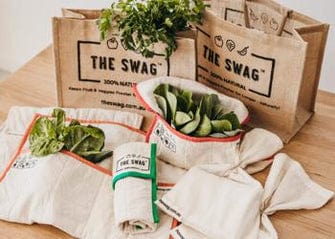
The Swag was thoughtfully designed to help solve this everyday problem.
Made from 100% natural, breathable cotton, The Swag creates a balanced storage environment that helps manage the two biggest causes of fresh produce spoilage: moisture loss and excess moisture.
Unlike sealed plastic bags or containers that can trap condensation, The Swag allows produce to breathe while maintaining the humidity levels needed to keep fruits and vegetables fresher for longer.
The result? Less food waste, fewer trips to the supermarket, and more value from the groceries you already buy.
The Swag Produce Bag: Designed To Pay For Itself
We looked at the numbers to understand how reducing produce waste could impact the average household budget.
Based on Australian food waste figures:
- The average household wastes approximately $2,000 worth of food each year.
- Around 42% of this is fresh fruit and vegetables.
- This equates to approximately $840 worth of wasted produce annually.
- Spread over 26 fortnights, this equals around $32 of fresh produce wasted every two weeks.
If using The Swag helps prevent even a portion of that waste, the savings quickly add up.
Because The Swag is reusable and designed to last for years, the benefits continue long after the initial purchase.
If a Swag is used at its full capacity, extending the life of your fresh produce for two weeks or more and therefore reducing or eliminating any food waste, a Swag is a smart investment that can pay for itself in the first 2 weeks of use! Learn more about how The Swag pays for itself here!
See The Swags Food Waste Prevention results for 2022-2023 here
The Science Behind The Swag
For years, customers have shared stories about how The Swag helps keep their fruit and vegetables fresh for longer.
But we wanted scientific evidence to understand exactly how and why it works.
We partnered with Australia’s Applied Horticultural Research to independently test The Swag’s effectiveness.
Researchers compared produce stored in The Swag against produce stored:
- In a plastic bag
- In a paper bag
- Without packaging in a domestic refrigerator
The testing focused on fresh produce that is known for having a short shelf life:
- Broccolini
- Blueberries
- Parsley
Here’s what they found:
- Blueberries lasted 38% longer in The Swag compared to being stored in their original punnet.

- Broccolini lasted 25% longer in The Swag than in plastic.

- Leafy herbs like parsley stayed fresh for more than two weeks and even reabsorbed moisture in later weeks when The Swag was kept damp.

- Produce stayed marketable for over two weeks and edible for up to four weeks.
The study concluded that The Swag provides “major quality improvements over storing vegetables in paper bags, plastic, or no packaging.”
Read about the full study here!
Creating the Ideal Environment for Fresh Produce
The Swag’s effectiveness comes from its unique three-layer design, which helps create the ideal environment for fresh produce. When the layers of The Swag are dampened down, your produce can breath and hydrate keeping it fresh and nutrient rich for longer. After all air and water are essential ingredients to life - right?
Outer layer
The durable outer cotton layer helps protect your produce, keeps your fridge cleaner and provides gentle insulation.
Middle layer
The absorbent middle layer helps hold moisture, creating a hydrated environment without trapping excess condensation.
Inner layers
The breathable inner layer allows airflow while gently protecting delicate fruits and vegetables.
This balance between moisture management and ventilation helps slow dehydration, reduce wilting and extend the usable life of your produce.
Storing your produce correctly not only means less food waste, it means your produce remains more nutritious for longer. Read more about this here
The Swag reusable produce bag: Proven to pay for itself in two weeks
We ran the numbers with the help of an in-house mathematician. Here’s what we found:
- The average Australian household wastes $2,000 of food per year.
- 42% of this is fruit and vegetables - that’s $840 of spoiled produce every year.
- Spread over 26 fortnights, that’s about $32.27 of fresh fruit and veggies wasted every two weeks.
A Large Swag costs little more than that (especially with our 10% welcome discount - sign up at the bottom of this page!). This means it starts paying for itself in around just two weeks of use if you use it to its full capacity.
For New Zealand households, the math is similar:
- NZ households waste around NZD$1,520 worth of food every year, with 41% of that being fresh produce - that’s about $623 of fruit and veggies wasted annually.
- Broken down, this is roughly $24 of spoiled produce every fortnight. At that rate, a Small Swag pays for itself in two weeks, while a Large Swag pays for itself in under a month when used to its full capacity.”
That’s just the beginning. Because The Swag is designed to last for years, those savings keep adding up over time - easily reaching $2,000+ per household per year.
Less Waste, More Savings
Switching to The Swag is a simple change that can make a meaningful difference.
Thoughtfully designed and proudly made to last for years with proper care, The Swag is an investment in both your household and the environment. In fact, many of our original customers are still using the very first Swags they purchased more than a decade ago.
Unlike single-use plastic bags that are thrown away after one use, a well-cared-for Swag can help reduce food waste, cut grocery costs and replace thousands of disposable plastic bags over its lifetime. For many families, that small upfront investment continues to deliver value year after year through fresher produce, less waste and fewer trips to the supermarket.
When you look after your Swag, it looks after your food—making it one of the simplest and most sustainable investments you can make in your kitchen. 🌱
💰 Save money over time
By helping prevent fresh produce from being wasted, The Swag allows households to get more value from their grocery spend and saves them money year on year!
🌱 Reduce food waste
Keeping fruit and vegetables fresher means less food ending up in landfill.
🌍 Reduce reliance on plastic
Reusable cotton produce bags provide a natural alternative to disposable plastic storage.
🥕 Make everyday life easier
When produce lasts longer, meal planning becomes simpler and healthier choices become easier.
So, which Swags are right for your household?
Sometimes we are asked how many Swags a household should buy, and which Swag is best suited to them. If you’re just getting started Swagging, then this is for you! This is also a great reference to have if you ever decide to purchase non toxic Swags as a gift for friends or family!
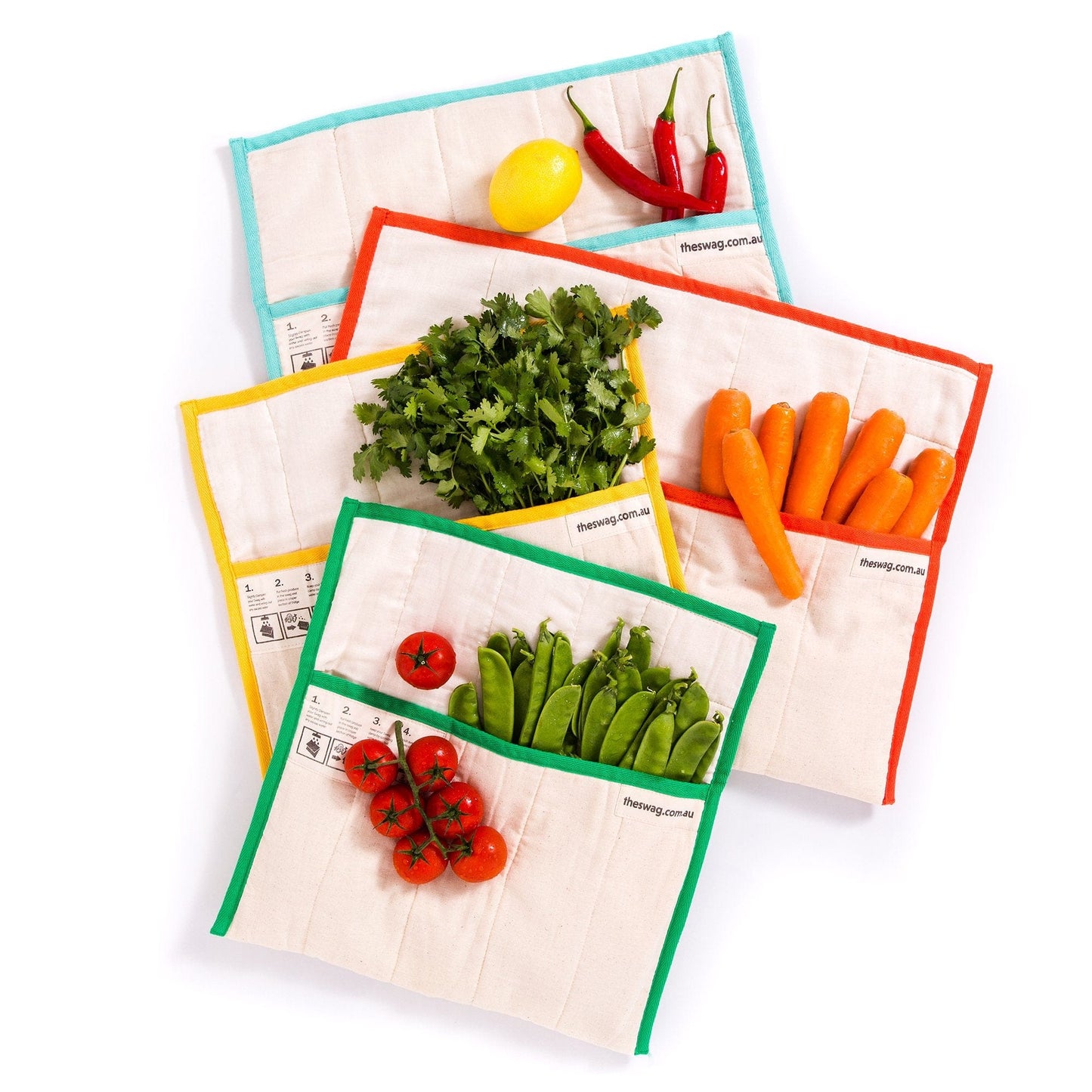
Plant-based household: If the entire fam is composed of plant-eaters, then your fridge is probably chock full with tons of fruit and veg! If that is the case, you’ll have to cast an eye over The Starter Pack. Our best seller is composed of four Swags; one long, one large and two small - all in different coloured trims to keep your fridge organised! Collectively, these can store up to 10kgs of produce per week. If you think you’ll need more than 4 Swags, you can always add individual Swags to your arsenal. The Lunch Swag is a great little bag to store your small root vegetables like turmeric, ginger, and garlic heads (just make sure it’s kept DRY and out of the fridge!). It’s also a great swap-out for sandwich bags, and can also be used for school lunches or the office! Save money, avoid plastic - it’s a win-win!
Lonely rider: If you’re riding solo and rarely eat fruit and veg but still have the fridge staple cucumber, tomato, carrot and apple at home, then The Twin Pack is a great and affordable way to trial the Swag. The Long Swag is great for leafy greens and long veg (think celery and leeks!) while the Small Swag is ideal for storing more fragile produce like mushrooms, herbs, green beans or any type of smaller vegetables! You can, of course, mix any type of fruit and veg in one Swag.
Large family: If you’ve got an entire tribe with a jam-packed fridge and find yourself with lots of slimy veg at the bottom of your crisper, then The Swag Deluxe Starter Pack will change your life and save your bank account! The Two Starter Packs includes eight Swags - enough to have your Swags on rotation - between full Swags in the fridge and Swags in the wash. The additional Swag Carry Bag is also a great side-kick for your weekly, plastic-free grocery shop!
Don’t forget to check out our other plastic-free, fully compostable home and kitchen alternatives here!
✅ Which Swags are right for your household?
All of our Swag products are multi faceted. Some examples are; our Bread Swag can be used for storing potatoes in the pantry. Our Swag veggies bags can be used (dry) for storing sourdough bread. Our Tea Swags can be used as a bouquet garni. For more uses for your Swag products check out our blog here
You may be surprised to know that our Swag lightweight produce bag set is quite versatile - in and out of the kitchen! From being your #1 sidekick when shopping for loose leaves or nuts, to everyday storage, your Produce Bags are sure to keep you covered! You can use them as a cheesecloth/strainer or filter used oil. Discover more ways to use your lightweight produce bags here!
People around the world are using The Swag. from families, to farmers and cafe owners and everyone in between. Meet our Swaggers here


