






How To Wash Fruit and Vegetables Properly
Washing fruit and vegetables may seem simple, but the way you clean your produce can make a difference to what is removed and what remains.
Fresh produce can pick up dirt from soil, handling, transport, storage and preparation. Some fruits and vegetables may also have surface residues from farming practices or natural coatings that help protect them.
A quick rinse under the tap is a good first step, but some produce benefits from a little extra care — especially leafy greens, textured vegetables and items with firmer skins.
This guide explains the best ways to wash fruit and vegetables, natural methods for reducing surface residues, and how to prepare your produce for longer-lasting freshness.
Why Do Fruit and Vegetables Need Washing?
Fresh produce travels through many hands and environments before it reaches your kitchen. Washing your fruit and vegetables can help remove:
- Dirt and soil particles
- Dust and debris
- Bacteria picked up during handling and transport
- Surface residues from farming and storage
- Natural wax coatings on some produce
While regulations help ensure produce is safe to eat, many people choose to wash their fruit and vegetables as part of their everyday food preparation routine.
Does Washing Fruit and Vegetables Remove Pesticides?
Washing can help reduce some surface residues, but it does not remove all pesticides.
How effective washing is depends on:
- The type of residue present
- Whether it sits on the surface or has been absorbed into the skin
- The texture of the produce
- The cleaning method used
Running produce under water and gently rubbing the surface is a good starting point. For some firmer produce, additional methods such as soaking or brushing may help remove more surface dirt and residues.
The Best Ways To Wash Fruit and Vegetables
1. Rinse Under Cold Running Water
For most fruit and vegetables, a thorough rinse under cold running water is the first step.
Hold produce under the tap and gently rub the surface with clean hands to remove loose dirt and debris.
This simple method works well for many everyday fruits and vegetables.
2. Use a Natural Vegetable Brush for Firm Produce
Vegetables with firm or textured surfaces can benefit from gentle brushing.
A natural-fibre vegetable brush is ideal for produce such as:
- Carrots
- Potatoes
- Beetroot
- Cucumbers
- Pumpkin
Avoid using excessive pressure — the goal is to clean the surface, not damage the skin.
Choosing a natural-fibre brush also avoids introducing plastic bristles into your kitchen routine.
The Swag's Veggie Brush is designed for exactly this: removing dirt and residues without micro-plastics, and breaking down naturally when you're done with it.
3. Soak Leafy Greens in Water
Leafy greens such as lettuce, spinach and herbs can trap dirt between their leaves.
To clean them:
- Fill a bowl with cold water.
- Separate the leaves and submerge them.
- Gently swirl the leaves through the water.
- Allow dirt and grit to settle at the bottom.
- Lift the greens out rather than pouring the water over them.
This helps remove trapped dirt while keeping delicate leaves intact.
4. Try a Baking Soda Soak
Some people choose to use baking soda as an additional cleaning step.
A simple method is:
- Add approximately 1 teaspoon of baking soda to 2 cups of water.
- Soak produce briefly.
- Rinse thoroughly with clean water afterwards.
Research suggests baking soda solutions may help reduce some surface pesticide residues more effectively than water alone.
5. Use a Vinegar Wash (Optional)
A vinegar wash is another popular natural cleaning method.
To make a simple produce wash:
- Mix 1 part white vinegar with 5 parts water.
- Soak firm produce for around 10–15 minutes.
- Gently rub or brush where needed.
- Rinse thoroughly with fresh water.
- Allow produce to dry before storing.
This method is best suited to firmer fruits and vegetables. Delicate produce such as berries should be handled carefully, as soaking can affect texture.
Why Avoid Plastic Vegetable Brushes?
Many traditional vegetable brushes are made with plastic or nylon bristles.
Over time, these brushes can:
- Shed small plastic particles
- Break down into waste that enters waterways
- Add unnecessary plastic to your kitchen
Choosing natural-fibre alternatives, such as coconut coir brushes, provides an effective way to clean produce while reducing plastic use.
The Swag's Veggie Brush is made from natural materials designed to help remove dirt and residues without adding plastic bristles to your food preparation routine.
How To Dry Fruit and Vegetables After Washing
Drying your produce properly after washing is an important step, especially before storage.
Excess moisture can encourage faster spoilage, particularly with delicate vegetables and leafy greens.
After washing:
- Gently shake off excess water
- Pat dry with a clean tea towel
- Use a salad spinner for leafy greens
- Allow produce to air dry before storing
How To Store Vegetables After Washing
Cleaning your produce is only half the process — storage plays a major role in maintaining freshness.
After washing:
✅ Avoid storing produce in sealed plastic bags, which can trap moisture and eythtlyne
✅ Allow leafy greens to dry before storing. These lightweight cotton bags are great to use to spin out any excess water from your leafy greens.
✅ Use breathable storage that helps balance airflow and humidity
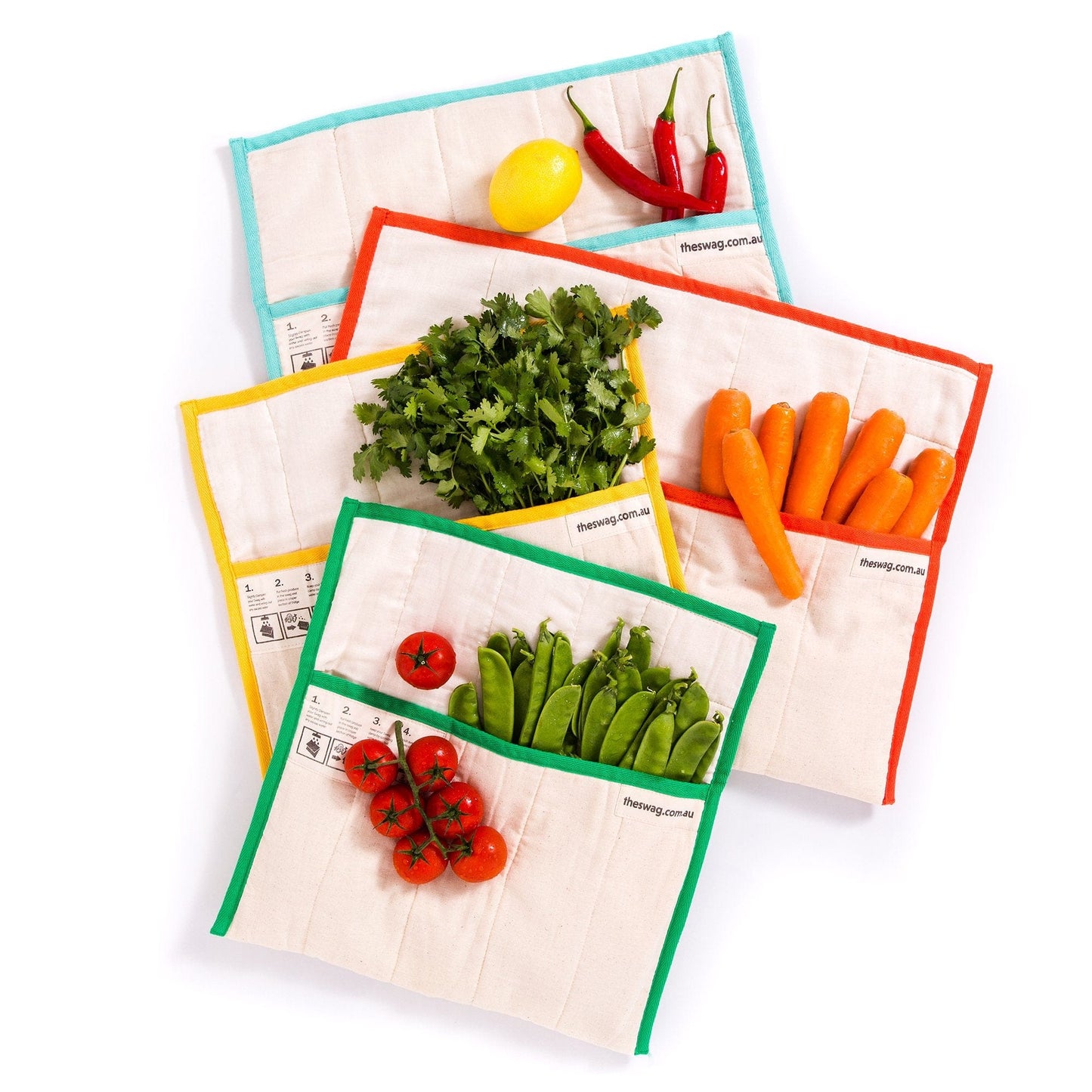
The Swag’s 100% natural and reusable produce bags for the fridge are designed around these principles, using breathable natural cotton to help create the ideal environment for keeping vegetables fresh for up to two weeks or more.
How To Wash Different Types of Produce
Firm vegetables
Examples: carrots, potatoes, beetroot
Scrub gently with a natural-fibre brush under running water.
Smooth-skinned produce
Examples: tomatoes, capsicums, cucumbers
Rinse under running water and rub gently with clean hands.
Leafy greens
Examples: lettuce, spinach, herbs
Soak in cold water, swirl gently, then lift out and dry thoroughly. These lightweight cotton bags are great to use to spin out any excess water from your leafy greens. Or you can just use a tea towel :)
Store your leafy greens in The Swag leafy greens bundle for great freshness.
Berries and delicate fruit
Rinse gently just before eating and avoid soaking for long periods.
Waxy produce
Examples: apples, cucumbers
Wash thoroughly and scrub gently if desired.
The Best Way To Wash Fruit and Vegetables: The Takeaway
Washing your fruit and vegetables properly does not need to be complicated.
With a few simple habits, you can:
- Remove dirt and surface residues
- Reduce unnecessary plastic use
- Improve the quality of your produce
- Prepare fruit and vegetables for better storage
Fresh food is not just about what you eat — it is also about how you care for it.
By combining the right washing techniques with proper storage, you can enjoy fresher produce for longer while reducing food waste. You can also check out our blog on storing your produce correctly and reduce food waste


